
One of the biggest questions home health nurses face is, “Does this patient really meet skilled nursing criteria?”
We’ve all been there—reviewing notes at the end of a long day, trying to decide if Medicare would agree that the patient still needs ongoing skilled visits.
The truth is, Medicare’s definition of a “skilled need” isn’t always black and white. But when you understand how to document those needs clearly, your chart tells the story — and your visits stay covered.
Let’s break down what “skilled need” really means, how to recognize it in your patients, and how to write it in a way that Medicare reviewers understand.
1. What Medicare Actually Means by “Skilled Need”
Medicare defines a skilled need as a service that requires the knowledge, judgment, and skill of a licensed nurse — not something that can be safely and effectively done by the patient or caregiver alone.
Common skilled needs include:
- Wound care (assessing healing, changing complex dressings, managing VAC therapy)
- Medication management for new or changed meds
- Teaching and training (disease management, insulin injections, dietary changes)
- Observation and assessment of unstable conditions (CHF, COPD, infection risk)
If you’re performing these interventions and documenting the skilled rationale, your visit likely qualifies as skilled.
2. What Doesn’t Count (and Why)
Medicare reviewers often deny visits that sound “routine” or “maintenance only.”
Phrases like “monitored patient status” or “reinforced teaching” without clear justification can trigger red flags.
Instead, show the nursing reasoning behind each action.
Example:
Instead of “monitored blood sugar,” document “assessed glucose levels to evaluate response to new basal insulin; patient remains at risk for hypoglycemia without skilled oversight.”
3. Real-World Example: The CHF Patient
A skilled need isn’t just about the task — it’s about the why.
Example:
Skilled nursing required to assess for signs of fluid overload, adjust patient education on sodium restriction, and communicate findings to physician for medication titration. Patient remains at high risk for hospitalization without skilled intervention.
That sentence connects your nursing judgment to the patient’s safety — exactly what Medicare wants to see.
4. Teaching & Training: Your Most Overlooked Skilled Need
Many nurses under-document teaching. But education is one of the strongest skilled justifications you can use — especially if the patient or caregiver is learning a new skill, like insulin administration or wound care.
Be specific about the teaching content, the patient’s response, and the ongoing need.
Example:
“Taught caregiver proper use of VAC system, including canister replacement and alarm troubleshooting. Caregiver required step-by-step guidance and ongoing reinforcement.”
5. Documentation Tip: Skilled Need + Risk = Coverage Defense
A simple way to remember how to document is:
Skilled Action + Clinical Reason + Risk if Unaddressed
For example:
“Assessed wound bed for granulation tissue, applied dressing per protocol, reinforced infection prevention teaching. Patient remains at risk for sepsis without skilled wound management.”
This structure makes your notes Medicare-defensible while staying true to what you actually do in the home.
Closing Thought:
Understanding what counts as a skilled nursing need doesn’t just protect reimbursement — it protects your license, your patients, and your sanity.
If you’ve ever found yourself wondering, “Is this still skilled?” or “How do I word this so it’s compliant?” — you’re not alone.
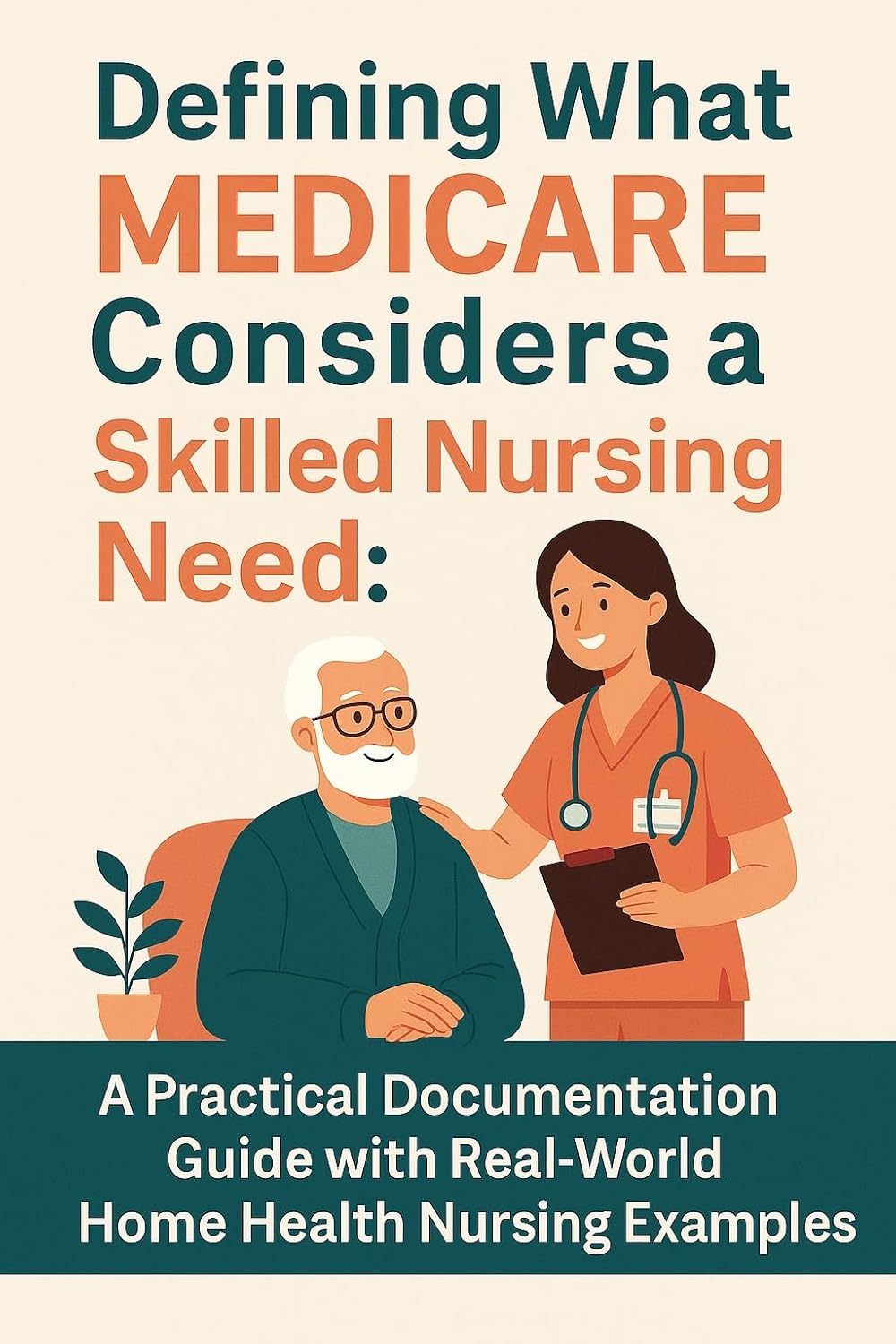
For real-world charting examples, documentation templates, and phrasing you can copy into your notes, check out my full guide:
Defining What Medicare Considers a Skilled Nursing Need: A Practical Documentation Guide with Real-World Home Health Nursing Examples
It’s everything I wish I had when I first started in home health.
[Get the Complete Guide on Amazon →]
If you’ve ever stopped mid-charting and wondered, “Does this visit still count as skilled?” — this one-page quick reference is for you.
Get your free printable checklist:
✅ What counts as a skilled nursing need
✅ What doesn’t
✅ The 3-part formula for defensible documentation
✅ Top 5 phrases that trigger denials
 RNonWheels
Leave a comment