
If you’ve ever sat with a patient who’s declining and thought, “We’re getting close, but the family isn’t ready to hear the word hospice,” you’re not alone.
For many home health nurses, recognizing when it’s time to discuss hospice care is easy — finding the right words to start that conversation is the hard part.
Hospice isn’t about giving up. It’s about shifting the focus to comfort, dignity, and quality of life. But families often need support to understand what that really means. As nurses, we play a crucial role in helping patients and families navigate this transition with compassion and clarity.
Here’s how to recognize when it’s time, how to have the talk, and what to tell patients and caregivers to expect when hospice begins.
1. Recognize the Signs That It’s Time to Talk About Hospice
The first step is clinical awareness. If your patient is showing one or more of these signs, it may be time to bring up hospice:
- Frequent hospitalizations or ER visits in the past 6 months
- Progressive weight loss or weakness
- Increasing shortness of breath, pain, or fatigue
- Decline in ADLs despite skilled interventions
- Patient or family expressing “I’m tired” or “I don’t want to go back to the hospital”
These moments are opportunities to open the door — gently and at the right pace.
2. Choose the Right Moment and Setting
Timing matters. The best conversations happen when the environment is calm and private. If possible, sit with both the patient and a key family member.
You might start by reflecting what you’ve observed:
“I’ve noticed you’re getting more tired, and the hospital trips are wearing you down. Have you thought about what’s most important to you right now?”
This approach keeps the conversation patient-centered and supportive, not directive or rushed.
3. Explain Hospice in Plain Language
Many families think hospice means “no care” or “the end.” The truth is, hospice is different care — not less care.
Explain that hospice brings:
- Skilled nurses, aides, social workers, and chaplains
- 24/7 on-call support
- Medication management for comfort
- Equipment and supplies delivered to the home
- A focus on living comfortably, not prolonging suffering
The key is reassurance: hospice supports both the patient and the family.
4. Address Common Fears
Families may worry that hospice means “the nurse won’t come anymore” or “Medicare won’t cover anything.”
Clarify that:
- Hospice is 100% covered by Medicare, Medi-Cal, and most insurances.
- Patients can stay on hospice as long as they continue to meet criteria.
- If their condition improves, they can revoke hospice and return to home health.
These details often bring tremendous relief once they’re clearly explained.
5. Support the Emotional Side
As nurses, we witness families processing fear, guilt, and grief in real time. Sometimes they just need space to say, “I’m not ready.”
That’s okay.
Your presence, empathy, and gentle persistence may make all the difference later when they are ready.
Document these discussions factually but compassionately:
“Discussed goals of care with patient and daughter. Provided education on hospice philosophy and services. Family will consider referral at next visit.”
6. After the Transition: What to Expect in Home Hospice
When hospice begins, patients often notice more support, not less.
A hospice nurse visits regularly, and the team handles medications, supplies, and emotional support. The goal is comfort — not abandonment.
Families should expect:
- Fewer ER trips
- Better symptom control
- Emotional and spiritual support for everyone involved
Most importantly, hospice care gives patients the gift of time — time spent at home, surrounded by those they love.
Closing Thought:
Starting the hospice conversation can be one of the hardest parts of home health nursing — but also one of the most meaningful. When we guide families with honesty and compassion, we help them see that hospice isn’t about giving up; it’s about living well until the end.
Free Download: Hospice Conversation Checklist for Home Health Nurses
Starting the hospice conversation can be one of the hardest — but most important — moments in home health. This free printable checklist gives you the confidence to guide families through it with clarity and compassion.
Download your free copy and get:
✅ Key signs that it’s time to introduce hospice
✅ Phrases to help start the conversation naturally
✅ How to explain hospice in plain language
✅ Common family fears — and how to respond
✅ Documentation phrasing that protects you and your agency
Download the Free Hospice Conversation Checklist →
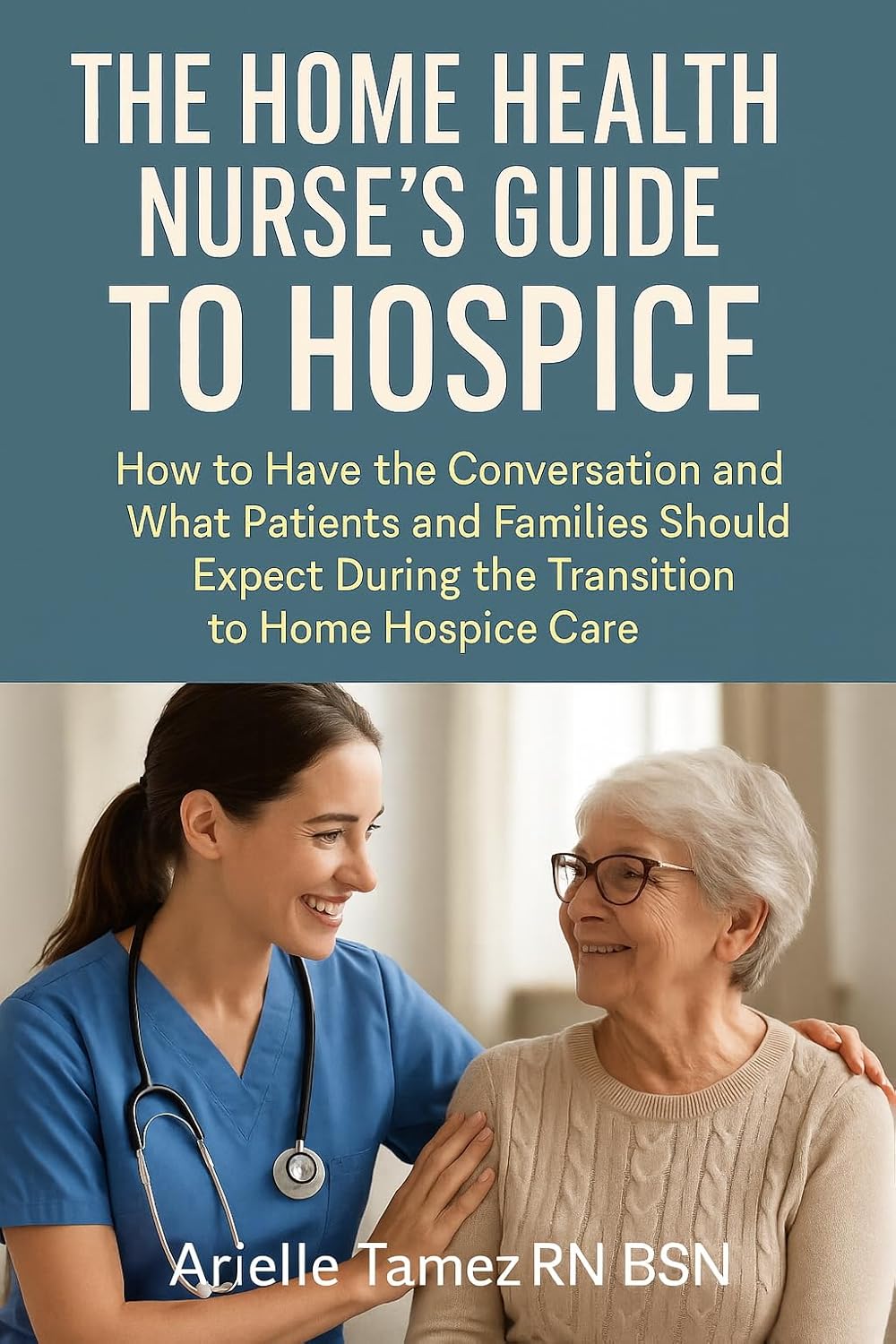
Then, take it a step further with my full field guide — The Home Health Nurse’s Guide to Hospice: How to Have the Conversation and What Patients and Families Should Expect During the Transition to Home Hospice Care.
[Get the Complete Guide on Amazon →]
 RNonWheels
Leave a comment