
Every home-health nurse has been there—standing in a patient’s living room, holding a 10 mL syringe, wondering why the line that worked perfectly last visit suddenly won’t flush.
It’s one of those moments that separates routine nursing from skilled clinical judgment.
In those situations, it’s not just about getting the line open—it’s about doing it safely, documenting it correctly, and protecting both the patient and your license.
That’s where Cathflo (alteplase) comes in. But before you reach for the vial, it’s essential to know how this medication works, when it’s appropriate, and what your documentation must include to stay Medicare-defensible.
Why Central Lines Occlude in the Home Setting
Catheter occlusions happen for many reasons: fibrin buildup, sluggish flow, precipitated medication, or a simple mechanical issue like a kinked extension set.
A skilled RN doesn’t skip straight to the thrombolytic—the process starts with careful assessment and troubleshooting.
What Makes Cathflo Different
Cathflo, or alteplase, is not a heparin flush. It’s a thrombolytic enzyme that dissolves fibrin clots and restores patency to occluded central lines.
Used correctly, it’s extremely effective. Used incorrectly, it can pose risks or trigger payer denials.
A key fact many RNs miss: after about four hours, Cathflo loses most of its activity.
If it’s been sitting that long, it must be aspirated—never flushed in.
This single detail can be the difference between a safe, compliant visit and a reportable event.
The Real-World Challenge
In home health, you’re often the only clinician onsite. There’s no IV team to call and no immediate backup if something goes wrong.
Your decision-making, documentation, and follow-up plan must show clear clinical reasoning.
That’s why education and preparation matter so much in this setting.
Why I Wrote This Book
I created A Home Health RN’s Comprehensive Guide to Cathflo (Alteplase) Use, Catheter Patency, and Patient Safety in the Home Setting because there wasn’t a nurse-centered field guide that explained the “why,” the “how,” and the “how to chart it.”
This book takes the mystery out of thrombolytic therapy in home health.
It walks you through assessment, dwell management, safety monitoring, and defensible documentation—so you can feel confident from start to finish.
Free Download: The Cathflo Administration Quick-Reference Checklist
Want a handy one-page printable for your nursing bag?
Download my free Cathflo Administration Quick-Reference Checklist—it includes step-by-step prep, dwell-time reminders, and documentation prompts that match Medicare’s skilled-need standards.
👉 Click here to download your free Cathflo Quick-Reference Checklist
This free tool pairs perfectly with the full field guide and helps you standardize your Cathflo visits while keeping your chart audit-ready.
Get Your Copy of the Full Guide
If you’ve ever had a line that refused to flush, this book was written for you.
It’s the most comprehensive, practical, and compliance-focused resource for home-health RNs managing catheter occlusions.
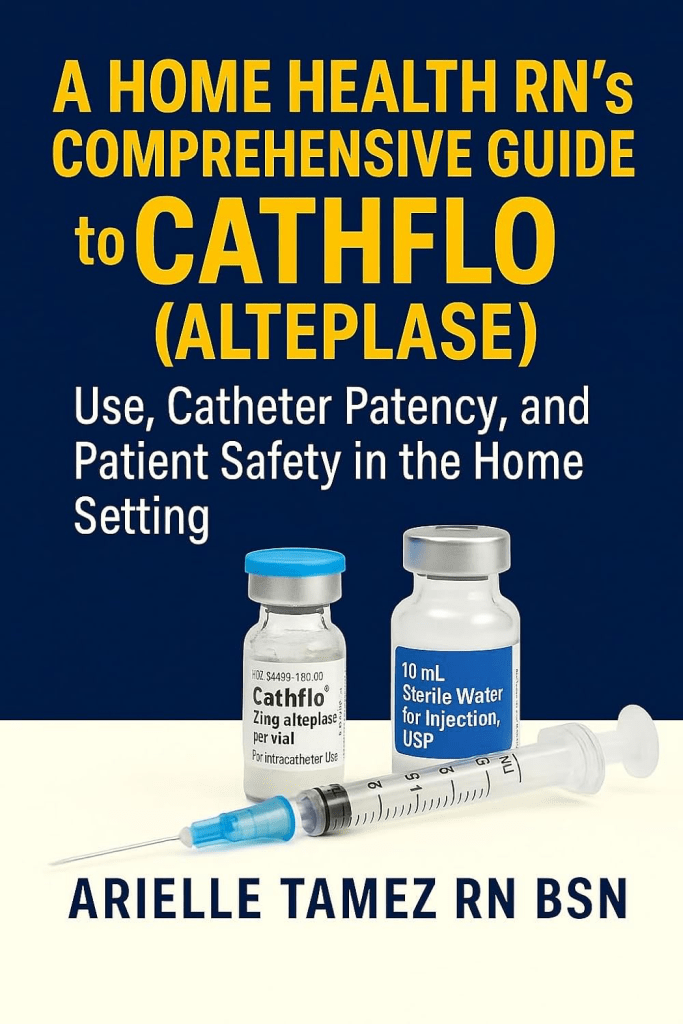
👉 Get your copy on Amazon – still publishing will update link when available
A Home Health RN’s Comprehensive Guide to Cathflo (Alteplase) Use, Catheter Patency, and Patient Safety in the Home Setting
By Arielle Tamez, RN BSN
 RNonWheels
Leave a comment