
If you’re a veteran or a family member trying to figure out VA home care benefits, you’re not alone.
Many people know that the VA offers help at home — but understanding what services exist, who qualifies, and how to actually get started is where most families get stuck. The information is often scattered, inconsistent, or written in language that feels overwhelming when you’re already dealing with health changes or caregiving responsibilities.
This post breaks down the basics of VA home care in clear, practical terms — and gives you a free resource to help you take the next step with confidence.
What Are VA Home Care Benefits?
VA home care benefits are designed to help eligible veterans receive medical care, support services, and assistance in their own homes instead of in hospitals or long-term care facilities.
Depending on eligibility and clinical need, services may include:
- Skilled nursing visits
- Assistance with activities of daily living
- Care coordination and case management
- Therapy services
- Support for family caregivers
- Home-based primary care
The goal is to help veterans remain safe, supported, and as independent as possible at home.
Why VA Home Care Is Often Confusing
In practice, many veterans and families struggle because:
- Eligibility rules vary by program
- Referrals are often required
- Services depend on both medical need and VA approval
- VA care works differently than Medicare or private insurance
Families are frequently left asking:
- Who do I call first?
- What do we actually qualify for?
- Why did someone else get services we were denied?
- How do we advocate without pushing the wrong buttons?
These are reasonable questions — and they’re exactly why having clear guidance matters.
The Role of Families and Caregivers
One of the biggest misconceptions about VA home care is that it only involves the veteran.
In reality, families and caregivers play a central role:
- Communicating changes in condition
- Coordinating appointments
- Managing medications and daily care
- Following up on referrals and services
Understanding how caregivers fit into the VA system can make the difference between stalled care and meaningful support.
How This Guide Helps
I wrote VA Benefits for Home Care: How Veterans and Families Can Access, Coordinate, and Use Home-Based Support to bring all of this information together in one place — in plain language, without jargon or policy overload.
The book walks through:
- What VA home care options exist
- How eligibility is determined
- How to start the process
- How VA care differs from Medicare
- How families can advocate effectively
- What to do when needs change over time
It’s written for veterans and caregivers — not clinicians — and designed to be a reference you can return to as situations evolve.
Free Download: VA Home Care Quick-Start Checklist
To help you take immediate action, I’ve created a free, high-quality download you can use right away.
📄 Free VA Home Care Quick-Start Checklist
This printable guide helps you:
- Organize key VA information in one place
- Identify which home care services may apply
- Prepare for conversations with VA providers
- Track referrals, next steps, and follow-ups
- Know what questions to ask — and when to ask them
This is the same type of framework I use as a home health nurse when helping families navigate care systems.
👉 Download the free VA Home Care Quick-Start Checklist here
A Note from the Author
As an Air Force veteran and home health nurse, I’ve worked with many veterans and families who qualified for help — but didn’t know how to access it or were overwhelmed by the process. My goal is to make this information clearer, calmer, and easier to use, so you don’t have to navigate it alone.
Learn More
If you’re ready for a deeper, step-by-step explanation of VA home care benefits, eligibility, and coordination:
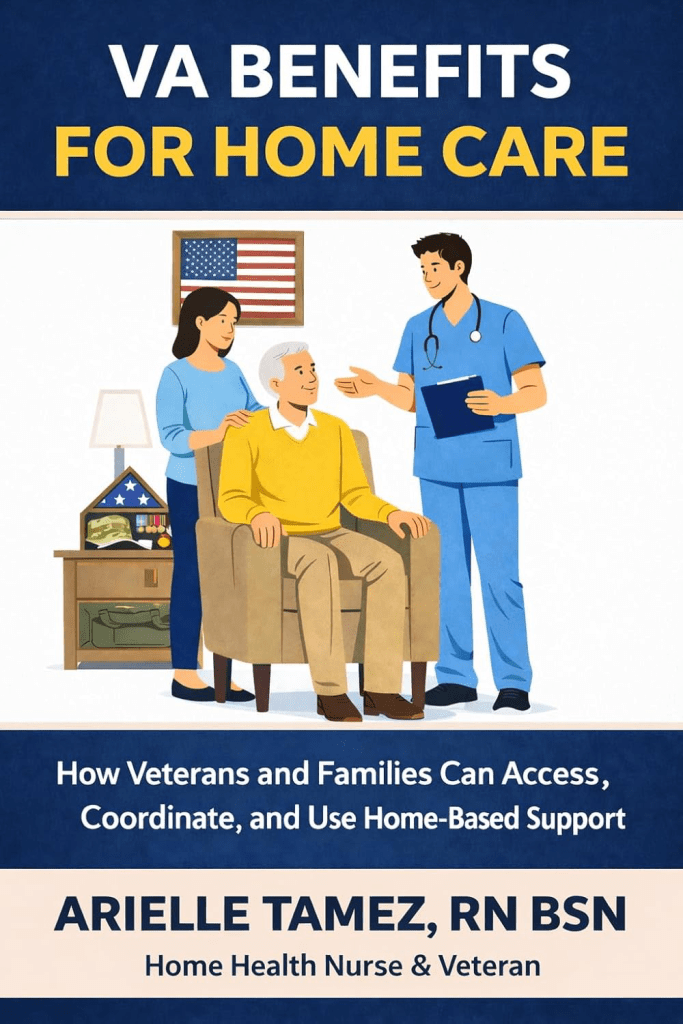
Whether you’re planning ahead or responding to a current need, having the right information can make navigating VA home care feel far more manageable.
 RNonWheels
Leave a comment