
The Start of Care visit doesn’t actually start when you walk into the home.
It starts with the pre-SOC phone call.
This call is one of the most overlooked parts of home health, but when it’s done well, it can save you time, prevent safety issues, and make the SOC run smoother from the moment you arrive.
The goal of the pre-SOC call is not to complete the assessment early.
It’s to gather just enough information to walk into the home prepared.
Here’s how to approach it—and what actually matters.
Why the Pre-SOC Call Is Important
A strong pre-SOC call helps you:
- confirm the visit is appropriate and safe
- anticipate barriers before you’re at the door
- reduce surprises that derail the SOC
- set expectations with the patient and caregiver
It also protects your time and your safety as the clinician.
What to Confirm First: The Basics
Start with simple confirmation questions.
You want to verify:
- patient name and date of birth
- address and directions (including gate codes or parking issues)
- who will be present during the visit
- best phone number to reach them
This sounds basic, but missed details here are a common reason SOCs start late or feel rushed.
Clarify the Reason for Home Health
Next, confirm why home health is involved, using plain language.
You’re not quizzing the patient—you’re checking alignment.
Examples:
- “Can you tell me why home health was ordered for you?”
- “What were you recently in the hospital for?”
If the patient’s answer doesn’t match the referral, that’s a cue to slow down and clarify during the visit.
Ask About Immediate Safety Concerns
Before showing up, you need to know if there are environmental or personal safety concerns.
Appropriate questions include:
- Are there pets in the home?
- Is anyone currently ill with something contagious?
- Are there stairs to enter the home?
- Is there oxygen equipment already set up?
You’re not screening to refuse care—you’re screening to prepare.
Identify Barriers That Affect the SOC Flow
This is where the pre-SOC call really pays off.
Ask about:
- hearing or vision issues
- need for an interpreter
- cognitive impairment or confusion
- whether the patient fatigues easily
- whether a caregiver manages medications
Knowing this ahead of time helps you plan how to pace the visit and structure teaching.
Set Expectations for the Visit
Many SOC frustrations come from mismatched expectations.
It’s reasonable to tell the patient:
- the visit may take longer than a routine nurse visit
- you’ll be reviewing medications and doing a full assessment
- having medications and paperwork ready is helpful
Setting expectations upfront reduces resistance and interruptions once you’re in the home.
What Not to Do on the Pre-SOC Call
The pre-SOC call is not the time to:
- complete assessments
- review every medication
- provide detailed teaching
- rush through information
Save your energy for the visit itself.
How This Impacts Your Documentation
A well-done pre-SOC call makes it easier to:
- document accurate homebound status
- identify skilled need early
- anticipate teaching priorities
- avoid incomplete or fragmented SOCs
It supports better clinical judgment—not just efficiency.
Want a Repeatable SOC System?
The pre-SOC call is just one part of running a smooth Start of Care.
In my RN Home Health SOC Guide, I break down the entire SOC process step by step—from pre-visit preparation and phone calls to assessment flow, documentation, and follow-up—using real-world home health scenarios.
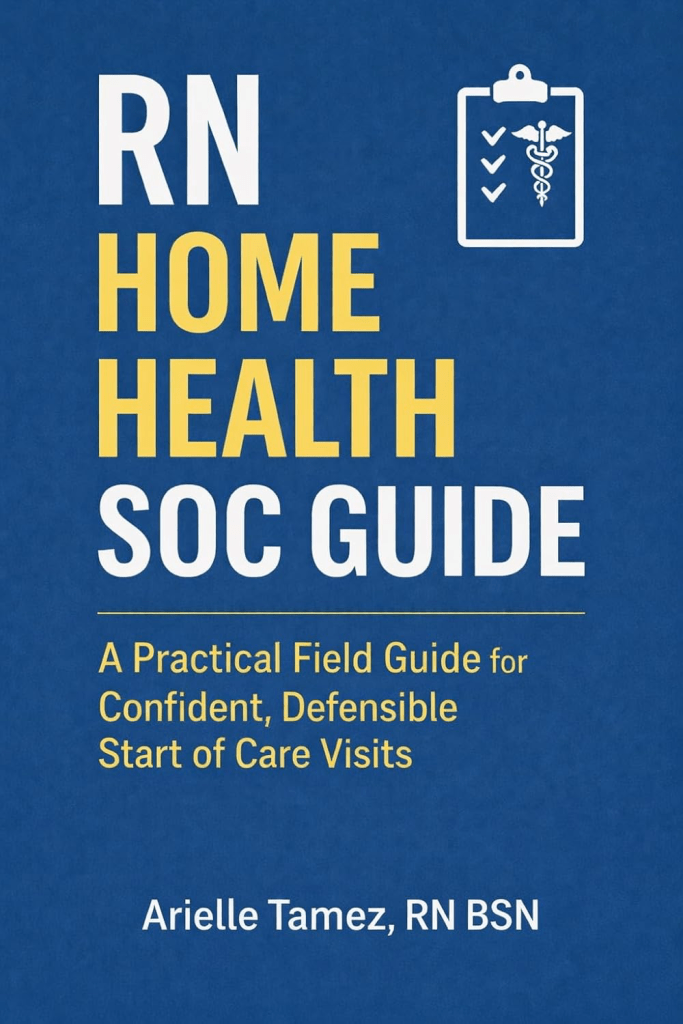
If you want a clear, repeatable SOC framework you can use on every admission, you can find the guide linked on Amazon.
 RNonWheels
Leave a comment