
Referral packets can be long, repetitive, and overwhelming—especially when you’re heading into a Start of Care visit with limited time.
The mistake many home health nurses make is trying to read everything.
The goal of reviewing referral documents before an SOC is not to memorize the chart.
It’s to identify the information that will change how you assess, teach, and document during the visit.
Here’s what to read—and what to skip—so your SOC is focused and efficient.
What to Read Before an SOC
1. The Current Reason for Referral
Start with why home health is involved right now.
Look for:
- The most recent hospitalization or acute event
- The primary diagnosis tied to the referral
- Notes explaining what changed recently
This gives context for your assessment and helps you avoid spending time on conditions that have been stable for years.
2. Recent Changes That Affect Function or Safety
Next, scan for anything new.
Pay attention to:
- New or changed medications
- New oxygen requirements
- New wounds, incisions, or skin issues
- New equipment such as walkers or hospital beds
- New weakness, fatigue, shortness of breath, or confusion
These details should guide how you pace the visit, what teaching to prioritize, and how you frame homebound and skilled-need documentation.
3. Risk Flags in Discharge or Case Management Notes
Some of the most important information is buried in non-clinical notes.
Scan for:
- Recent falls
- Repeat hospitalizations
- Notes about poor adherence
- Caregiver strain or limited support
- Safety concerns raised by other providers
These clues often predict where problems will show up during the SOC—even if the patient downplays them.
4. Orders, Providers, and Timing
Before walking into the home, make sure the referral is structurally sound.
Confirm:
- The certifying provider
- Face-to-Face encounter documentation and timing
- Any requested visit frequencies or discipline orders
Catching issues early prevents delays and corrections later in the episode.
What You Can Skip (At Least Before the Visit)
You do not need to:
- Read every hospital progress note
- Memorize the full problem list
- Review years of historical diagnoses
- Reconcile every past medication change
Those details can be addressed during or after the visit if needed. Pre-SOC review is about preparation, not perfection.
Why This Matters for Your SOC
When you scan referral documents with intention, you walk into the home knowing:
- where to slow down
- what risks to assess first
- what education will matter most
- how to structure your documentation
That makes the SOC more focused, safer, and easier to manage—especially with complex patients.
Want the Full SOC Framework?
Referral scanning is just one part of running a solid Start of Care visit.
In my RN Home Health SOC Guide, I break down the entire SOC process step by step—from pre-visit preparation and assessment flow to documentation and follow-up—using real-world home health scenarios.
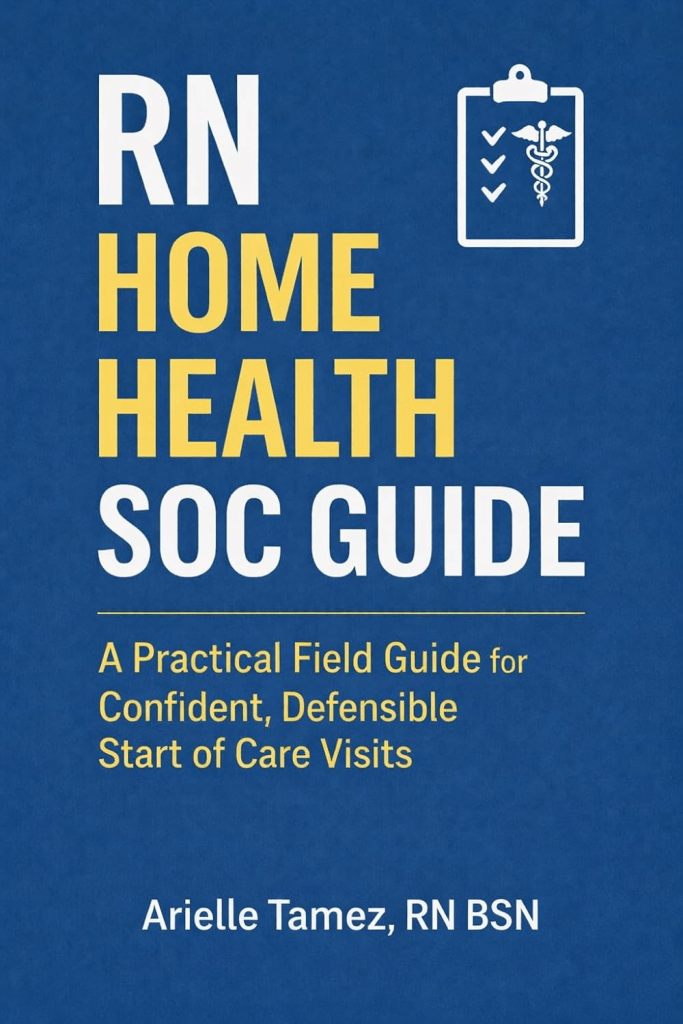
get the full guide on amazon .
 RNonWheels
Leave a comment