
The past medical history section on a Start of Care can feel overwhelming.
It’s a long list of diagnoses.
Some are old.
Some aren’t even related to the referral.
And no one ever really explains how you’re supposed to use it.
As a result, most home health nurses do one of two things:
- skim it quickly and move on, or
- overthink it and feel like they need to memorize everything
Neither approach is helpful.
The past medical history section is not a test.
It’s a context tool.
Here’s how to use it the right way.
What the Past Medical History Section Is For
The past medical history exists to help you understand:
- baseline risk
- patterns of illness
- conditions that affect safety, function, or teaching
- why certain complications are more likely
It is not there to explain why the patient is on service today.
That comes from the current diagnosis and recent hospitalization.
How to Scan the Past Medical History Quickly
You don’t need to read every diagnosis in detail.
Instead, scan for conditions that:
- affect mobility or endurance
- increase fall risk
- complicate medication management
- increase infection or skin breakdown risk
- impact cognition, judgment, or learning
Examples include:
- heart failure, COPD, CKD
- diabetes with complications
- prior strokes
- dementia or cognitive impairment
- recurrent infections
Those diagnoses tell you where to slow down during the SOC.
What to Do With Old or Irrelevant Diagnoses
Every SOC includes diagnoses that are no longer active or clinically relevant.
You do not need to:
- remove them
- teach on all of them
- document each one in your narrative
If a diagnosis does not affect the patient’s current function, safety, or plan of care, it doesn’t need your attention during the visit.
How Past Medical History Supports Skilled Need
Past medical history helps explain why skilled nursing judgment is required, even when the patient appears stable.
For example:
- A patient with heart failure and CKD needs closer medication monitoring
- A patient with diabetes and neuropathy has higher fall and skin risk
- A patient with prior strokes may need repeated teaching and reassessment
You’re not documenting the diagnosis — you’re documenting its impact.
How It Fits Into Your SOC Documentation
You do not need to rewrite the past medical history in your narrative.
Instead:
- reference relevant conditions when explaining risk
- link them to assessment findings
- use them to justify teaching, monitoring, and visit frequency
This keeps your documentation focused and defensible without being excessive.
The Rule of Thumb
If a past diagnosis:
- changes safety
- affects function
- complicates teaching or monitoring
It matters.
If it doesn’t, you don’t need to dwell on it.
Want a Clear SOC Framework?
The past medical history section makes more sense when it’s part of a clear SOC flow.
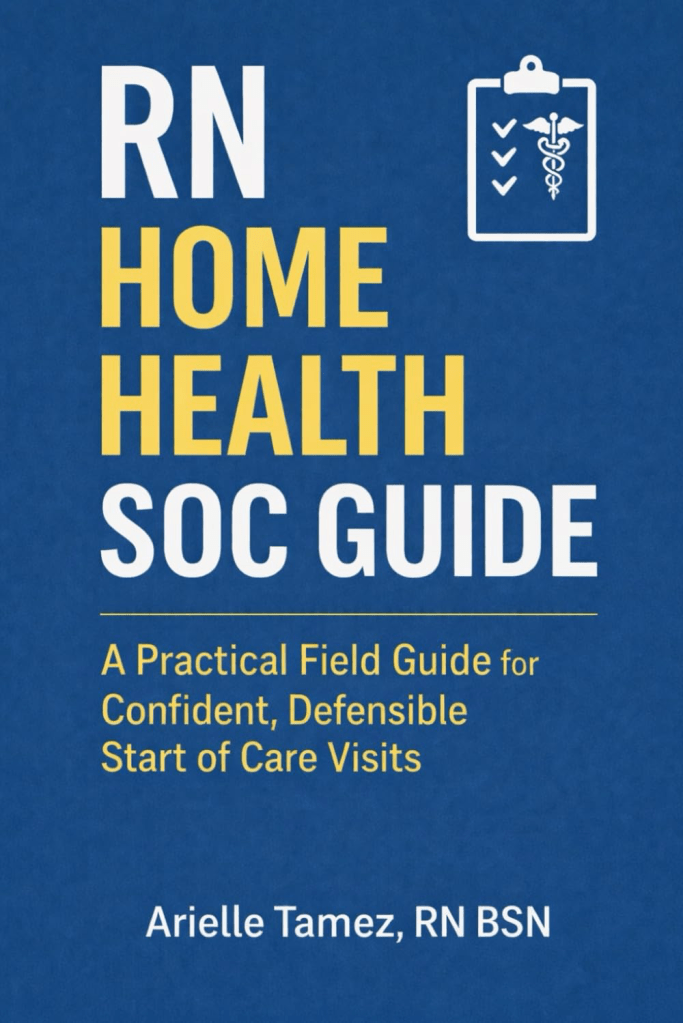
In my RN Home Health SOC Guide, I break down every section of the SOC — including how to use referral information, past medical history, assessments, and documentation — in a practical, step-by-step way using real home health scenarios.
If you want a repeatable system for running SOCs without overthinking every section, you can find the guide on Amazon.
 RNonWheels
Leave a comment