
If you do wound care in home health, you see granulation tissue all the time — but it’s also one of the most misunderstood findings in the field.
Granulation tissue is often treated like a simple “good sign,” but in reality, how it looks, how it behaves, and how you manage it matters, especially when you’re working without clear wound orders.
Let’s break it down in a way that actually helps you in the home.
What Is Granulation Tissue?
Granulation tissue is new connective tissue and tiny blood vessels that form during the healing phase of a wound. It usually appears red or pink, moist, and bumpy or “beefy” in texture.
In home health terms, granulation tissue tells you one thing clearly:
The wound is trying to heal.
But that doesn’t mean it’s healing correctly — or that you can stop paying attention.
What Healthy Granulation Tissue Looks Like
Healthy granulation tissue is:
- Red to pink
- Moist (not dry or crusted)
- Even in texture
- Bleeds slightly if disturbed
This tells you the wound has:
- Adequate blood flow
- A reasonable moisture balance
- No dominant infection process
When you see this, your job is to protect it, not disrupt it.
When Granulation Tissue Is a Problem
Not all granulation tissue is healthy.
Here are common red flags home health nurses should recognize:
Pale or dusky granulation
This can signal poor perfusion or pressure issues.
Friable or bleeding granulation
May indicate trauma from overpacking, frequent dressing changes, or inappropriate products.
Hypergranulation (granulation above skin level)
Often caused by excess moisture, friction, or prolonged occlusion. This can delay epithelialization.
Granulation with heavy drainage or odor
Granulation can coexist with infection — don’t assume “red means safe.”
Granulation tissue should always be interpreted in context, not in isolation.
Common Home Health Mistakes With Granulation Tissue
These are things nurses do when they’re not given clear wound orders:
- Packing a shallow granulating wound “just because it’s open”
- Using drying agents on healthy granulation
- Changing dressings too frequently and disrupting new tissue
- Ignoring periwound breakdown because “the base looks good”
Granulation tissue can be damaged easily. Once you lose it, you’re often starting the healing process over.
What You Can Safely Do When There Are No Orders
Even without wound-specific orders, you can assess and advocate appropriately.
Your assessment should always include:
- Tissue type percentage (how much granulation vs slough/eschar)
- Moisture level
- Drainage amount and type
- Periwound condition
- Pain and bleeding response
- Signs of pressure, friction, or shear
If granulation is present, interim goals usually include:
- Moisture balance (not wet, not dry)
- Protection from trauma
- Avoiding unnecessary packing
- Preventing infection
Your documentation should reflect what the wound is doing and what it needs, even if you’re waiting for provider approval.
How Granulation Tissue Affects NPWT Decisions
Granulation tissue plays a major role in wound vac decisions.
In the home:
- Granulation does not automatically mean stop NPWT
- It does affect foam choice, pressure settings, and frequency
- Poorly managed NPWT can cause hypergranulation or bleeding
This is where many nurses feel stuck — especially when orders are vague or outdated.
Want a Step-By-Step Framework for This?
This exact situation — granulation tissue with no clear orders — is why I wrote
Home Health Wound Care Without Orders: A Field Manual for RN Assessment, Interim Treatment, Provider-Approved Regimens, and Advanced NPWT.
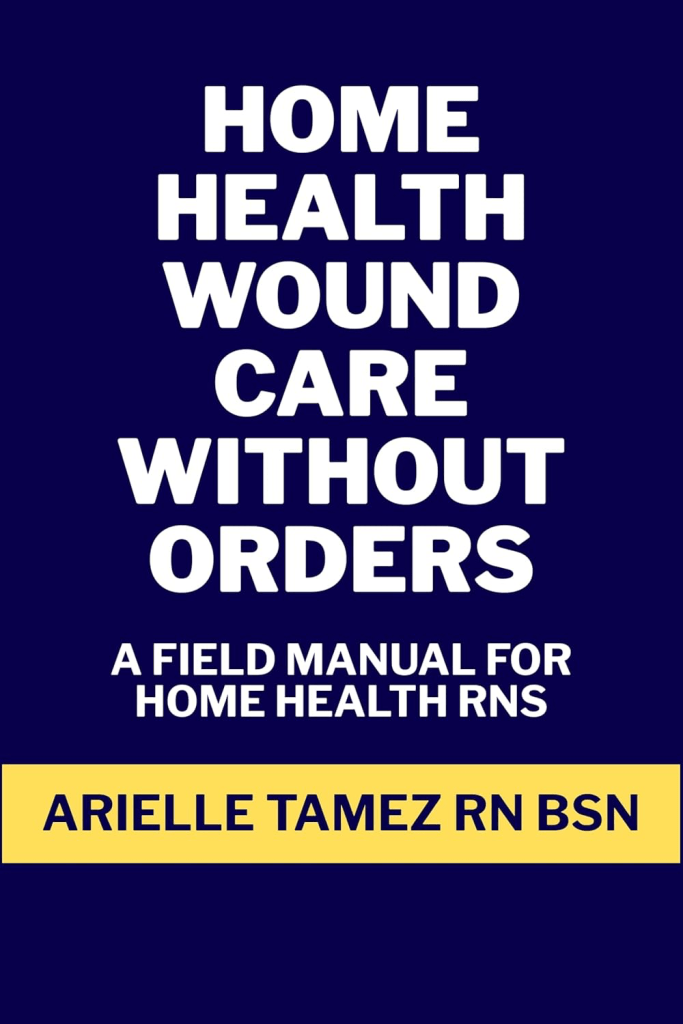
The book walks through:
- How to assess granulation tissue in context
- What interim actions are reasonable and defensible
- How to document granulation accurately
- How to advocate for updated orders
- How to manage complex wounds and NPWT safely in the home
It’s written specifically for home health RNs, not hospitals, not textbooks — the real-world situations we actually deal with.
Bottom Line
Granulation tissue is a good sign — but only when it’s healthy, protected, and properly managed.
Your role in home health isn’t just to “see red and move on.”
It’s to recognize what that tissue is telling you, protect it, and speak up when the wound needs more support than the current orders allow.
If you want a deeper, practical framework you can use visit-to-visit, my field manual is linked above.
 RNonWheels
Leave a comment