
If you do wound care in home health, you’ve seen slough — probably a lot.
And if we’re being honest, slough is one of those findings that makes nurses pause and think,
“Okay… now what?”
Because in the home setting, we’re often dealing with sloughy wounds and no clear wound orders, limited supplies, and providers who aren’t seeing the wound in real time.
So let’s break down what slough actually means, why it matters, and what your role is as the home health nurse.
What Is Slough?
Slough is non-viable (dead) tissue in the wound bed.
It commonly appears:
- Yellow, tan, gray, or off-white
- Stringy, soft, or thick
- Loosely attached or firmly adhered
Here’s the key point every home health nurse needs to remember:
If slough is present, the wound is not fully healing.
Granulation tissue = healing tissue.
Slough = tissue that is slowing or blocking healing.
What Slough Tells You Clinically
Slough is rarely the main problem.
It’s usually a signal that something else is off.
When you see slough, think about:
- Excess moisture or maceration
- Poor perfusion
- Ongoing inflammation or low-grade infection
- Pressure, friction, or shear
- Overpacking or overly occlusive dressings
If slough sits in a wound visit after visit without changing, that’s a stalled wound, not “normal healing.”
Common Home Health Mistakes With Slough
These are things nurses do when they’re unsure or don’t have orders:
- Packing sloughy wounds tightly “to fill the space”
- Letting slough sit unchanged for weeks
- Using drying agents on mixed wounds
- Focusing only on the wound bed and ignoring the periwound
- Avoiding escalation because “there aren’t any wound orders”
All of these can delay healing — and put the nurse in a bad documentation position.
Can Home Health Nurses Debride Slough?
This depends on:
- Your scope of practice
- Agency policy
- Provider orders
In most home health settings:
- Sharp debridement → provider or wound specialist
- Enzymatic debridement → requires an order
- Mechanical debridement → limited use, high risk of tissue damage
Your role is not to “fix” the slough — it’s to assess, protect, document, and advocate.
What You Can Do Without Orders
Even without wound-specific orders, you should be doing a thorough assessment.
That includes:
- Percentage of slough in the wound bed
- Color and thickness
- Whether it’s loose or firmly attached
- Drainage amount and type
- Periwound condition
- Pain, odor, or bleeding
You can also:
- Manage moisture balance
- Protect surrounding skin
- Avoid overpacking
- Stop practices that damage viable tissue
And most importantly — escalate appropriately.
A strong provider message sounds like:
“Wound bed is 60% adherent yellow slough, unchanged for three weeks. Findings are consistent with stalled healing. Recommend debridement or enzymatic agent.”
That language matters.
Slough vs. Infection
Slough does not automatically mean infection.
But slough raises infection risk, so you need to monitor closely for:
- Increasing pain
- Malodor
- Purulent drainage
- Friable tissue
- Periwound redness or warmth
- Systemic symptoms
Document both what you see and what you’re watching for.
Slough and Wound VACs (NPWT)
This is a big one in home health.
Heavy slough and NPWT don’t mix well.
Foam placed over slough can:
- Trap bacteria
- Worsen infection risk
- Delay granulation
If a wound vac is ordered on a slough-heavy wound, that’s not a “just follow the order” situation — that’s a provider conversation backed by assessment and documentation.
Why This Gets So Hard in Home Health
In hospitals, wounds are often debrided quickly.
In home health?
- Orders lag
- Providers don’t see the wound
- Nurses are expected to “maintain” without direction
That’s exactly why assessment skill and documentation matter so much in this setting.
A Step-By-Step Framework for These Situations
Slough with no clear orders is one of the most common and stressful wound scenarios in home health.
It’s also a major reason I wrote
Home Health Wound Care Without Orders: A Field Manual for RN Assessment, Interim Treatment, Provider-Approved Regimens, and Advanced NPWT.
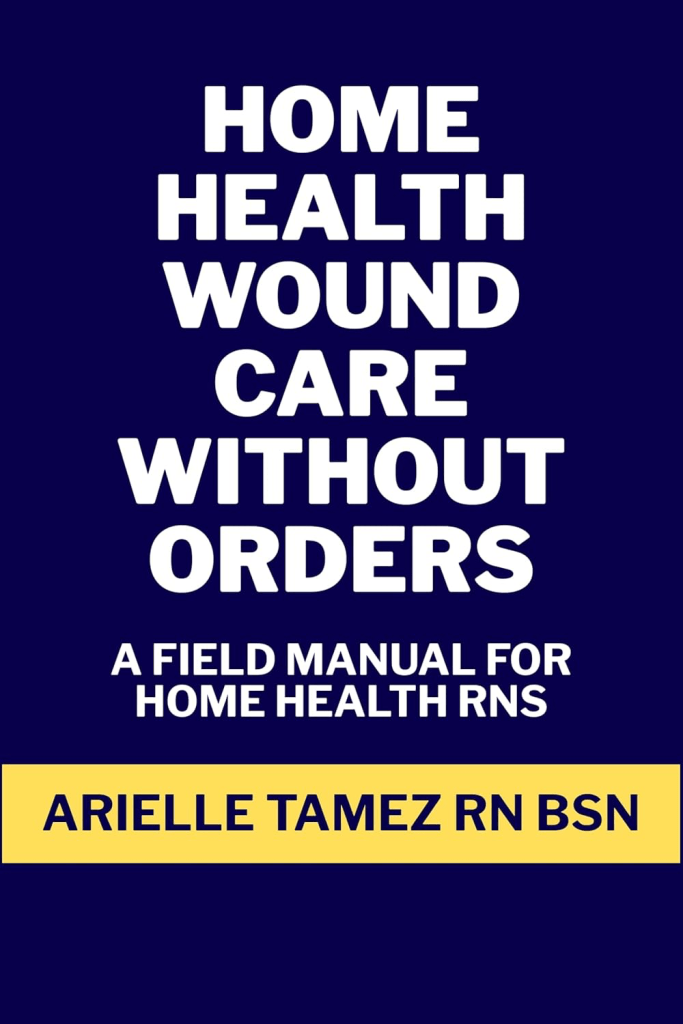
The book walks through:
- How to assess slough in context
- What interim care is reasonable and defensible
- How to document stalled wounds clearly
- How to advocate for next-step treatment
- How to handle complex wounds and NPWT safely in the home
It’s written specifically for home health RNs, not hospital wound teams.
Bottom Line
If slough is present:
- The wound is stalled
- Healing is incomplete
- The plan may need to change
Your job isn’t to ignore it or just “cover it and move on.”
Your job is to recognize it early, protect the wound, and speak up when the current plan isn’t enough.
If you want a clear, practical framework you can use visit to visit, the field manual is linked above.
 RNonWheels
Leave a comment